The Breach Doesn't Start on the Day You Discover It
We often mark a breach from the day it's detected. In reality, that's when defenders finally notice. The real question isn't when you discovered it—it's when the attacker actually began.
Most organizations measure the beginning of a cyberattack from the moment an alert is triggered or an incident is declared.
The reality is very different.
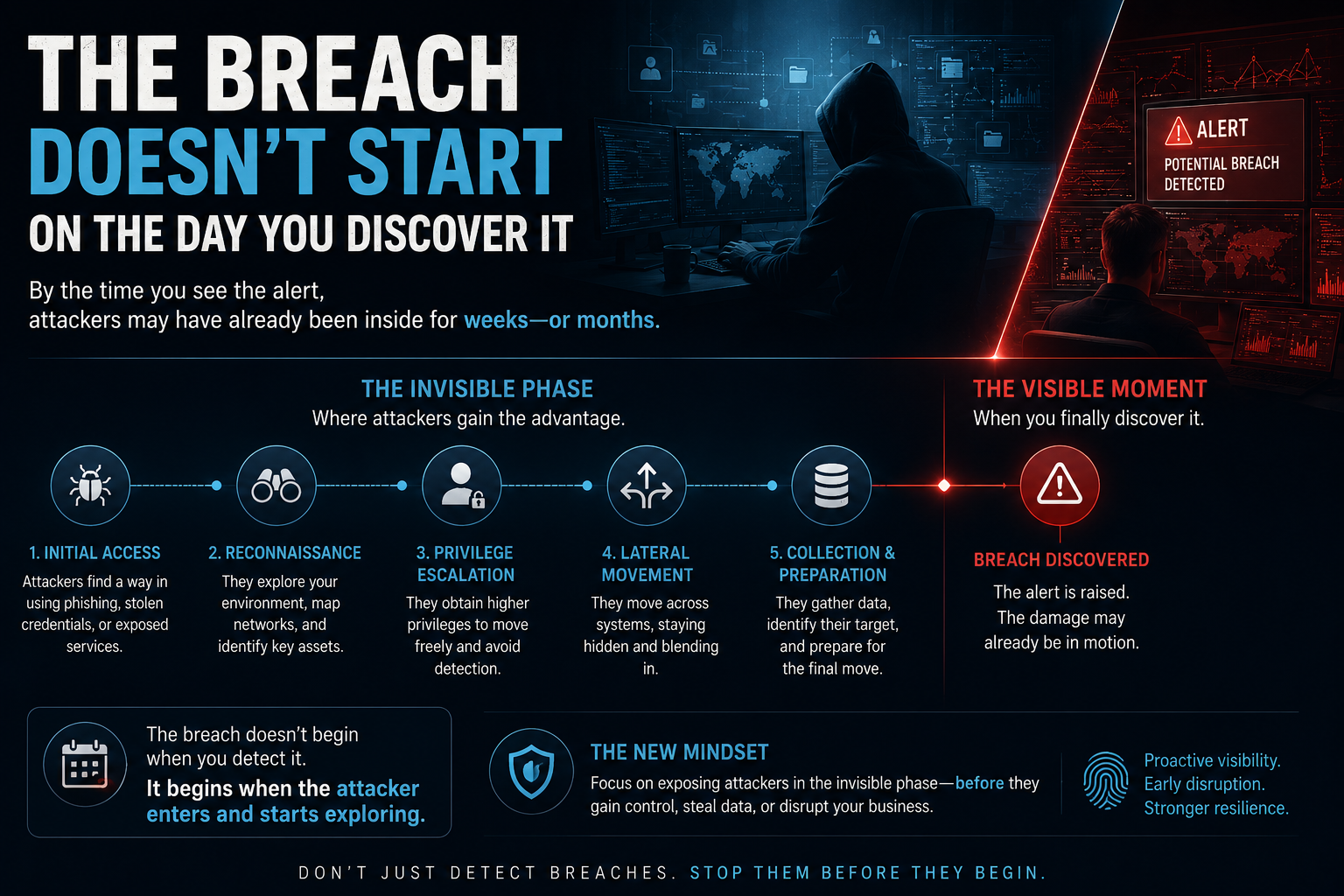
A breach rarely begins on the day it is discovered. By that point, the attacker has often spent days, weeks, or even months quietly learning your environment, mapping your infrastructure, identifying valuable assets, and understanding how your people and systems behave.
The compromise starts long before the first alarm.
The Invisible Phase of Every Attack
Modern attackers don't rush. They are patient.
Before deploying ransomware, stealing sensitive data, or disrupting operations, they typically move through several stages:
- Initial access through phishing, stolen credentials, or exposed services.
- Internal reconnaissance to understand networks and critical systems.
- Privilege escalation and lateral movement.
- Data collection and preparation.
- Execution of the final objective.
Throughout much of this journey, attackers often blend into normal activity, making traditional security tools struggle to distinguish malicious behavior from legitimate operations.
Why Traditional Security Often Misses It
Security teams have invested heavily in prevention and detection. Firewalls, endpoint protection, SIEMs, EDRs, and XDR platforms generate enormous volumes of alerts.
Yet these tools are largely designed to detect known indicators of compromise or suspicious events after they occur.
If an attacker behaves like a legitimate user - or simply moves slowly enough-they can remain unnoticed.
By the time security teams investigate an alert, the adversary may already have achieved persistence and positioned themselves deep inside the environment.
The Cost of Late Discovery
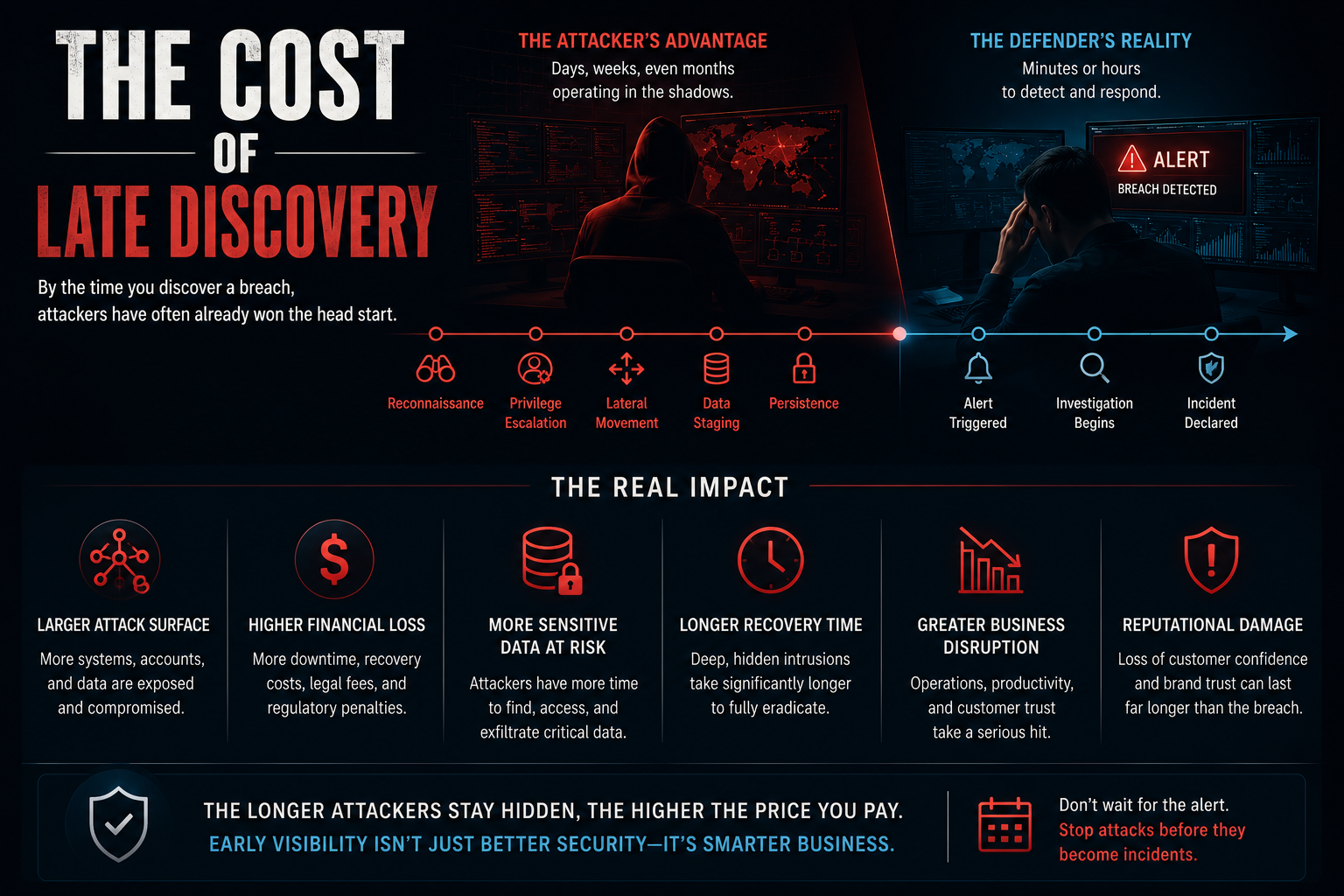
The greatest damage often occurs before organizations even realize they're under attack.
Late discovery can lead to:
- Larger attack surfaces being compromised.
- Greater operational disruption.
- Increased financial losses.
- More sensitive data exposed.
- Longer recovery times.
- Greater reputational damage.
Every hour an attacker remains undetected increases both their advantage and the organization's risk.
Shifting From Detection to Disruption
The future of cybersecurity isn't just about detecting attacks faster.
It's about disrupting attackers before they accomplish their objectives.
Organizations need environments that force adversaries to reveal themselves during reconnaissance, lateral movement, and privilege escalation—not after data has already been stolen.
This requires moving beyond passive monitoring toward active cyber resilience.
The New Security Mindset
The question is no longer:
"How quickly can we respond after detecting a breach?"
The better question is:
"How early can we expose an attacker before the breach succeeds?"
That shift changes everything.
Because the breach doesn't start when you discover it.
It starts the moment an adversary begins exploring your environment.
The organizations that recognize this reality will be the ones that stop attacks before they become headlines. That's the challenge MirrorMire is built to address - helping organizations expose attackers during the invisible phase of an attack, before reconnaissance turns into compromise.